

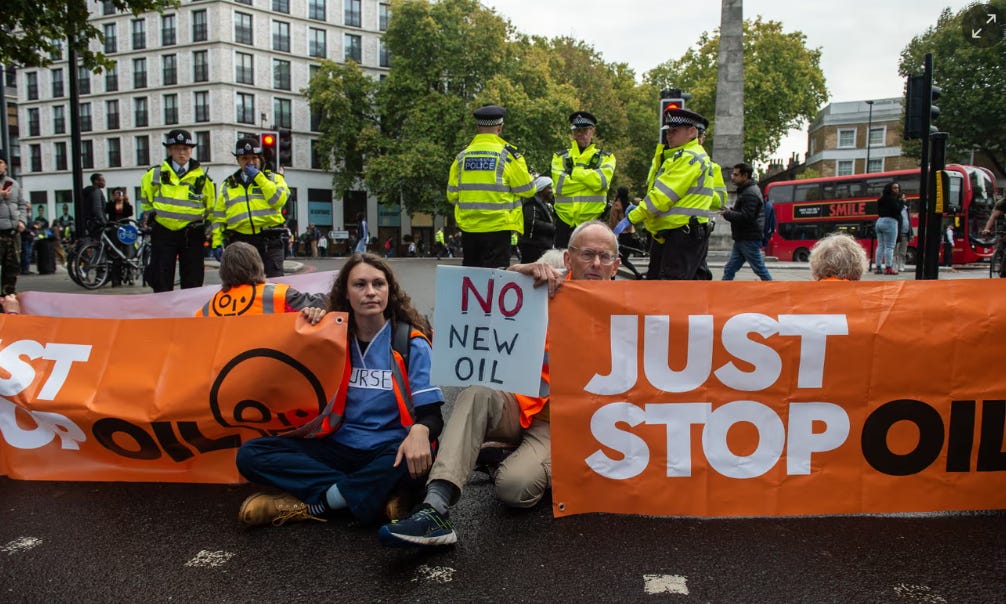
I am one of those people whom the media have dubbed with the ominous title of “Climate Change Skeptic.”
That doesn’t mean that I don’t believe in “climate change,” whatever that means. I know that the climate changes. Anyone who reads literature, as I do, knows that it used to snow in London every Christmas and now it’s rare.
However, I am not wholly convinced that (a) the world is actually getting warmer; (b) if it is getting warmer, that human beings are the principal cause; and (c) even if human beings are the principal cause, that we should shut down our entire civilization on the dubious and unproven premise that doing so will do any good.
I am especially skeptical when the spokespeople for this point of view are sanctimonious celebrity hypocrites like Al Gore and John Kerry who travel to climate change conferences in their private Gulfstream jets and live in 10,000-square-foot mansions that are lit up like Christmas trees.
Needless to say, progressive true believers – are there any other kind? — liken people like myself to Holocaust Deniers.
People who are skeptical of their grand plans – such as shutting down oil processing plants or converting all cars to electricity – are not merely obstructionist; they’re actually dangerous.
They should probably be ignored… their rebuttals not allowed into print… their votes discounted. Some Democrat politicians even think their views should be made, well, illegal.
But there is a reason for my skepticism.
I am now old enough to have listened to the far left prattle on about the coming end of the world for well nigh forty years now.
John Kerry, Al Gore and AOC are nothing new. They are merely the latest in a long line of far-left demagogues who use selective rhetoric to advance their political agendas.
In the 1960s, when I was just a kid, liberals and progressives were constantly haranguing anyone who would listen about how the world was coming to an end due to overpopulation.
Paul Erhlich wrote a book, The Population Bomb, that predicted the End of Life as We Know it as the teeming masses “bred” themselves into extinction.
All the leading experts and scientists agreed: We needed to adopt draconian anti-population measures, such as those used in Communist China, to stop the apocalypse.
According to Ehrlich, 65 million Americans would die of starvation between 1980 and 1989. “If I were a gambler, I would take even money that England will not exist in the year 2000,” he added.
Of course, every single one of Ehlich’s lunatic predictions were proven 100% false — but that didn’t prevent most members of the Harvard faculty, like most enlightened liberals, from swallowing them wholesale.
What the nations of Western Europe face today — indeed, as Elon Musk now recognizes, the entire world faces — is not a population bomb but a “birth dearth.”
The globalist politicians who now run most nations in the West have imported tens of millions of poor Third World migrants, allegedly to run our factories and farms because there are not enough people.
Then it was Earth Day.
Earth Day was big in the 1970s when I was growing up.
All of the world’s top scientists, politicians and Hollywood celebrities agreed that we were poisoning the earth and, as a result, the world would soon face mass starvation.
The message was clear: there was very little time left! Just as with today’s climate change, then, too, there was “widespread agreement” and a “consensus” by “all” the top experts.
“Civilization will end within 15 or 30 years unless immediate action is taken against problems facing mankind,” said George Wald, a biologist at Harvard University, in 1970. We knew this because all the experts agreed “unanimously,” just like the United Nations today:
“Demographers agree almost unanimously on the following grim timetable: by 1975 widespread famines will begin in India; these will spread by 1990 to include all of India, Pakistan, China and the Near East, Africa. By the year 2000, or conceivably sooner, South and Central America will exist under famine conditions….By the year 2000, thirty years from now, the entire world, with the exception of Western Europe, North America, and Australia, will be in famine.”
— Peter Gunter, professor, North Texas State University
As always, the benighted masses were told to just shut up and follow orders by their would-be masters, the liberal Democrats in Congress.
Science had spoken. Here is Life Magazine’s editorial in January 1970:
“Scientists have solid experimental and theoretical evidence to support…the following predictions: In a decade, urban dwellers will have to wear gas masks to survive air pollution…by 1985 air pollution will have reduced the amount of sunlight reaching earth by one half….”
Guess what? Didn’t happen. We somehow muddled through. The scientists who made these predictions were wrong.
Next it was the coming shortage of oil. After the Arab Oil Embargo of 1973, all the experts agreed: the world would run out of oil in “ten years or less.”
