

In the 1990s, a handful of scientists, mathematicians and lawyers launched an organized critique of evolutionary theory that became known as the Intelligent Design (ID) movement. The leaders in this movement included the attorney Phillip Johnson, the biochemist Michael Behe and the mathematician William Dembski.
These experts claimed that there are structures underlying biological organisms, on both the anatomical and molecular level, that are so complex – “irreducibly complex,” as they put it – that the only plausible explanation is that these structures did not arise through the evolutionary process of natural selection but were, instead, planned by an intelligent designer.
The leaders of the movement insisted that they were making a strictly scientific proposal, not a religious one, and that the designer to which they were appealing was not necessarily God. The movement was met with skepticism, even outright hostility, by many scientists, legal professionals and the media who derided it as pseudo-science, even likening the movement to the so-called “creation science” popular among some conservative Christians.

Overview of the Intelligent Design Movement
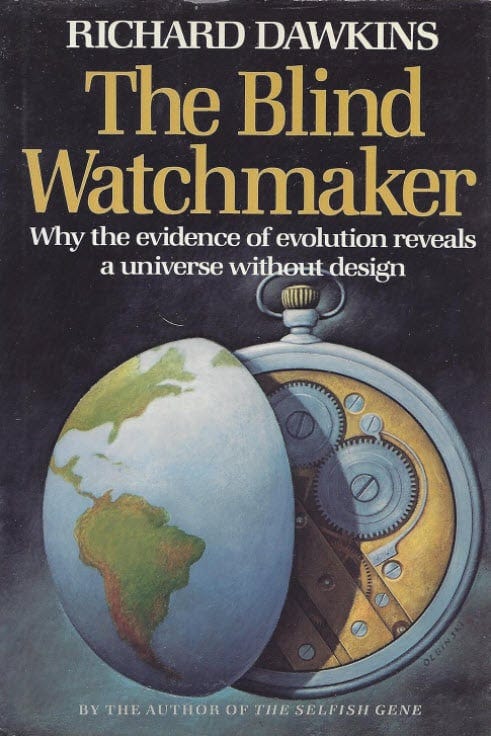
Future historians could date the founding of the ID movement to the encounter in the early 1990s that Phillip Johnson, a University of California professor of law, had with Richard Dawkins’s polemical and bestselling 1987 interpretation of evolution, The Blind Watchmaker. By his own account, Johnson was appalled by the unproven assumptions that undergirded Dawkins’s book and set about, with lawyerly thoroughness, to examine and rebut these assumptions in a series of equally best-selling books, most famously Darwin on Trial (1993). Johnson himself is a lawyer, not a scientist, and he focused his attack on Dawkins and evolution by concentrating on the unproven philosophical assumptions and faulty logic that, he claimed, lie throughout The Blind Watchmaker.
Very soon after Darwin on Trial appeared, however, others joined the ID crusade, including some with scientific credentials. Perhaps most influential was the Catholic biochemist Michael Behe who did his best to provide the scientific ammunition that Johnson lacked in his assault on standard evolutionary theory. In two influential books, Darwin’s Black Box: The Biochemical Challenge to Evolution (1996) and The Edge of Evolution (2007), Behe attempted to provide a theoretical framework for the claim that the theory of unguided evolution does not, and even cannot, explain all of the complex biological phenomena in nature.
Behe was joined by the mathematician William Dembski and together they developed a positive vision of a scientific alternative to standard evolutionary theory which they called Intelligent Design. Although Behe is a Catholic and Dembski Eastern Orthodox, not all proponents of ID are religious. Some of those open to ID arguments, such as the atheist philosopher Thomas Nagel, are impressed by the philosophical criticisms that ID presents. What’s more, ID proponents such as Behe go out of their way to stress that ID is a scientific movement, a criticism of standard evolutionary theory from within science itself.
In the late 1990s and early 2000s, Intelligent Design was championed by the Discovery Institute in Seattle and by some conservative and evangelical political organizations. These sought to pressure local school boards to include ID ideas and materials as part of the teaching of evolution in schools. This led to a famous court case in 2005, reminiscent of the original Scopes Monkey Trial, in which a conservative judge and practicing Lutheran ruled that ID could not be taught in schools because it is “not science,” fails to meet the requirements that “limit science to testable, natural explanations” and constitutes an attempt to impermissibly advance a particular religious viewpoint.
At the center of ID’s critique of standard evolutionary theory lies the concept of “irreducible complexity.” According to Behe, there are entities within biological systems that are so complex that they could not have evolved through the normal pathways of evolution, that is, through random genetic mutations and natural selection. Among the entities that Behe cites are the bacterial flagella, blood clotting and the elaborate assemblies of protein molecules that appear, within cells, like “an elaborate network of interlocking assembly lines.”
In Darwin’s Black Box, Behe defined an irreducibly complex system as “a single system composed of several well-matched, interacting parts that contribute to the basic function, wherein the removal of any one of the parts causes the system to effectively cease functioning.” He adds that such a system “cannot be produced directly… by slight, successive modifications of a precursor system, because any precursor to an irreducibly complex system that is missing a part is by definition non-functional. In other words, for Behe an irreducibly complex system has parts that have no other functions than those of that particular system and which are essential to that system.
Behe points to the bacterial flagellum as an example.
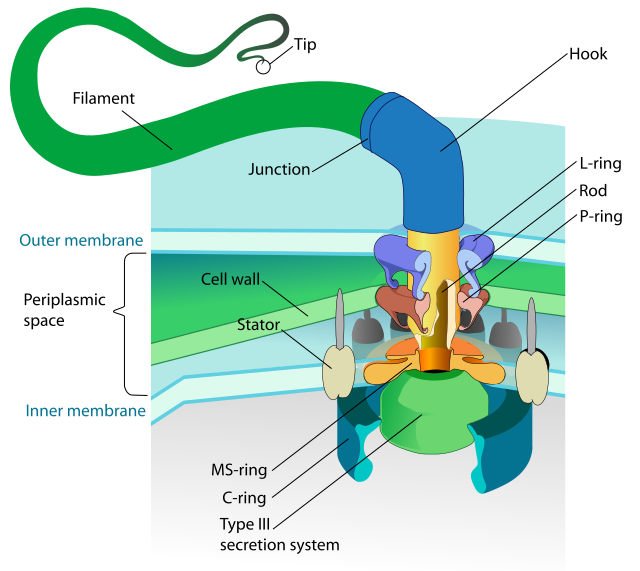
The flagellum is a kind of microscopic propeller system used by different types of bacteria for propulsion. As Behe explains, it consists of a long, hair-like filament embedded in the cell membranes that is attached to a rotor drive. Powerful electron microscopes have revealed that this rotor drive is powered by energy produced by ion exchange through a flow of acid into the bacterial membrane and which turns the filament like a propeller. Behe claims that the three parts that make up the flagellum – a paddle, rotor and motor – show that it is irreducibly complex.
“Gradual evolution of the flagellum… therefore faces mammoth hurdles,” he writes, by which he means it almost certainly was designed, not evolved through small, incremental changes over billions of years. “Even though we are told that all biology must be seen through the lens of evolution, no scientist has ever published a model to account for the gradual evolution of this extraordinary molecular machine,” Behe writes.
Denis Alexander’s Criticisms of Intelligent Design
Sophisticated ID advocates like Behe concede that the natural selection mechanism proposed by standard evolutionary theory provides reasonable explanations for some complex systems, just not for others – such as the bacterial flagellum. Behe agrees that evolution can explain biological complexity in principle and merely argues that we have no evidence for how it could do so in specific cases. According to critics of ID like the Christian biochemist Denis Alexander, however, the problem with arguments like this – so-called arguments from ignorance – is that new information has a way of popping up unexpectedly and ruining your case. For example, Alexander argues that scientists have discovered that some of the parts that make up the flagellum do have functions in other organisms, such as the ion exchange energy system that powers the flagellum filament. This seems to undercut the perception of design in this case because this part is not unique to the flagellum.

Alexander makes the same criticism for another example of an irreducibly complex system that Behe proposes: blood clotting. In Darwin’s Black Box, Behe argues that the complex biochemical system that is blood clotting – the way the body forms blood clots to stop bleeding when someone cuts his or her finger, for example – is irreducibly complex. Behe describes in great, professional detail the myriad steps that go into forming blood clots – how proteins called Hageman factor stick to cells near a wound, and then another protein called HMK activates the first proteins to turn another protein, called pre-kallikrein, into kallikrein, which then starts a whole chain reaction of complex biochemical transformations that result in the attraction of sticky platelets that flow through a wound and eventually congeal into a plug that stops the bleeding.
It’s an unbelievably complex, delicately balanced process involving a “menagerie of biochemicals” that Behe likens to a Rube Goldberg machine and before which, he says, “Darwinian theory falls silent.” What Behe means by this is that biologists have no explanation for how such a clotting mechanism could have gradually arisen through incremental, evolutionary steps.
Alexander’s reply is that this is simply incorrect. In fact, he claims that an evolutionary mechanism could explain how blood clotting arose “quite easily.” The details are difficult for a non-expert to follow, but in essence Alexander argues that all that is required to show an evolutionary pathway is to find simpler blood clotting systems in other animals from which larger animals evolved – for example, starfish.
