

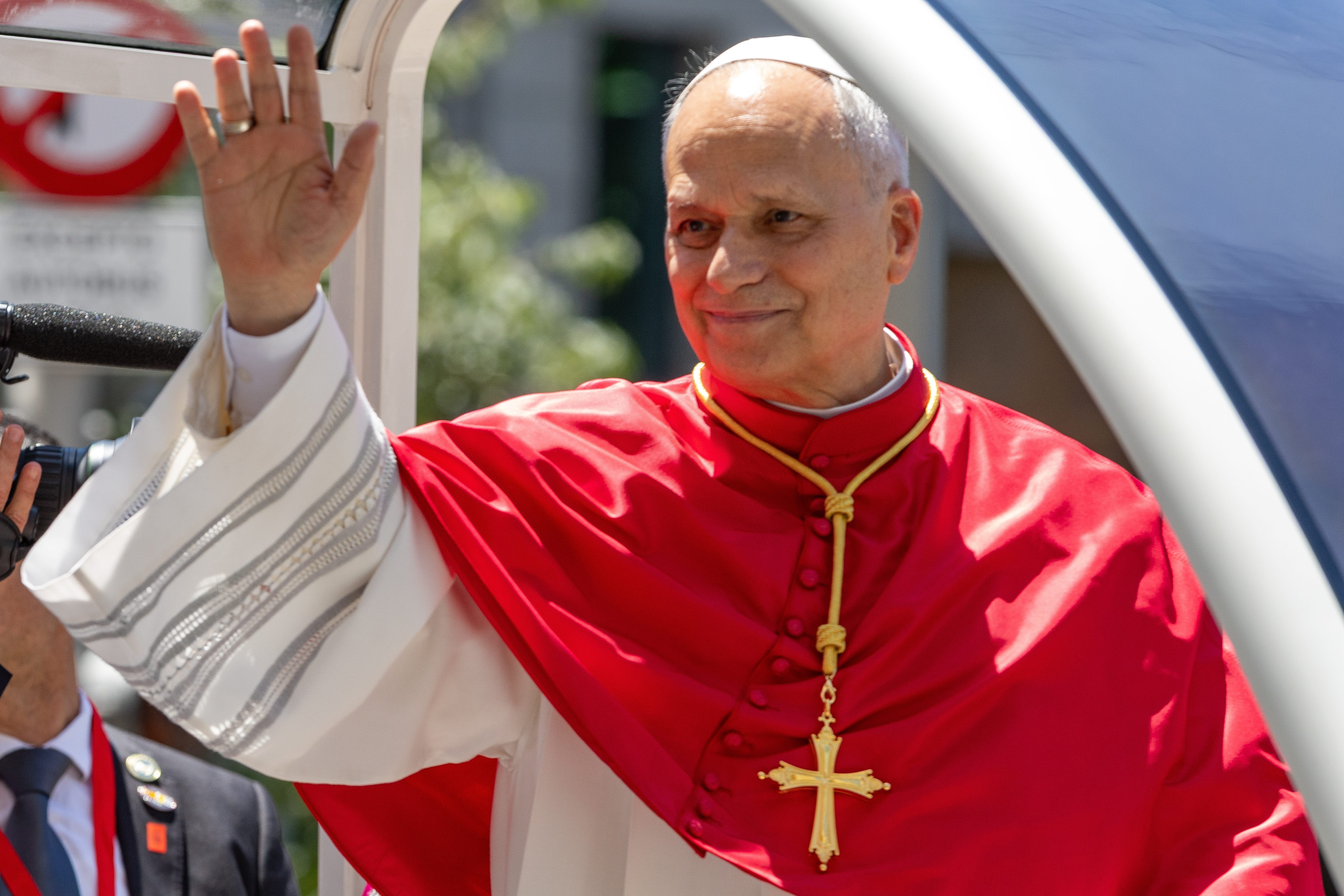
Pope Leo XIV visits the city of Madrid on an official trip, June 6, 2026 ( SPORT PRESS MEDIA / Shutterstock.com).
Thank you for reading! Disputed Questions is a reader-supported publication dedicated to exploring the questions that divide us with logic, fairness and, we hope, some humor. To receive new posts and support this publication, consider becoming a free or paid subscriber.
The Dicastery for the Doctrine of the Faith has just released a very interesting document on how Christian faith can be transmitted in what it calls an “epochal age.”
Entitled Venite Ad Me, the nearly 30,000-word text is a series of “considerations” on how faith can be shared that draws extensively on the teaching of recent popes, particularly Pope Francis, the mentor and protector of the DDF’s current prefect, Cardinal Víctor Manuel Fernández.
This topic is of particular interest to me since it’s also the subject of my research in the philosophy of religion, the nature of faith and its epistemic rationality.
I’m still reading it but Venite Ad Me makes several key points, all of which are worth considering.
More Than Believing in God
Venite Ad Me’s most basic claim is that Christianity is an encounter with Jesus Christ, not an assent to an intellectual system.
This very “evangelical” emphasis may strike many as self-evident but it’s not really. Many people believe that Christian faith is simply “believing in God” or going to church.
The document notes the traditional distinction between fides qua, the personal act of believing and entrusting oneself to God, from fides quae, the content believed. They go together, of course, but faith is not merely assent to a series of propositions but rather a trusting commitment to a person.
The problem is, the ways the Christian churches pass on this personal commitment to Christ have quite obviously broken down, at least in the wider world.
When Faith Is No Longer Inherited
Religious affiliation and practice have declined markedly in the United States and Europe in recent decades, driven largely by people leaving the faiths of their childhood (primarily for the “nones”—atheists, agnostics, or “nothing in particular”).
In the U.S., Pew’s 2023-24 Religious Landscape Study found that 62 percent of adults now identify as Christian (40 percent Protestant, 19 percent Catholic), down from 78 percent in 2007. The unaffiliated share rose from 16 percent (2007) to 29 percent.
Venite Ad Me argues that the passing on of the faith – that is, the trusting commitment to Jesus Christ -- among family, school, parish, and surrounding culture can no longer be assumed.
One interesting point: Its practical conclusion is that concentrating on children’s religious instruction is insufficient.

The Vatican document Venite ad me asks whether faith is something you learn or someone you trust (Shutterstock).
Beyond Religious Instruction
Adults who do not themselves live and embrace the faith cannot reliably transmit it. As a result, adult evangelization therefore becomes indispensable (nos. 42, 101).
In addition, Christian churches must now come to terms with the digital age and how it reshapes attention, relationships, memory, and authority.
Better Christian or Catholic “content” online is simply not enough.
Quoting Leo XIV’s Magnifica Humanitas, Ad Venite Me insists that the communication of faith is “deeply relational, built through bonds of trust and shared practices, as well as an honest exchange with others and with the world (no. 62).”
Rebuilding Communities of Faith
Ultimately, what is required is nothing less than the rebuilding of communities of faith both within and without the traditional Christian (parish) structures.
In the Catholic Church, many people have been inspired by the new movements of the past century, from the charismatic renewal to Opus Dei, the Focolare Movement and Comunione e Liberazione to the Neocatechumenal Way and the Community of Sant’Egidio
When I was studying in Israel in 2014, I was greatly inspired by two groups, the French order Chemin Neuf (with its house above an important archaeological dig in Nazareth) and the Hebrew Mass celebrated by the Saint James Vicariate for Hebrew-Speaking Catholics.
Different Paths to Belonging
Of course, many people I know are drawn to “trad” groups around the Latin Mass, such as the annual pilgrimage from Paris to Chartres Cathedral around Pentecost... or the Catholic Land Movement (CLM).
Home-based Bible studies... Latin study groups... online classes... all of these are attempts to build communities of adults drawn to a deeper encounter with Christ through the Church.
And Venite Ad Me makes the obvious point that these efforts are all, ultimately, based on the cultivation of friendship – which was always one of Opus Dei’s main strengths.
One Person at a Time
The personal encounter with Jesus Christ is passed on through friendship, one person at a time.
“Friendship, in fact, constitutes a privileged space in which personal witness, mutual support, and the sharing of life’s joys and struggles make it possible to share the faith in a way that engages one’s entire existence,” the document concludes. “Along with the family, healthy friendship is the setting par excellence for authentic relationships, where believers can accompany and support one another in following Christ (no. 89).”
In the past, this cultivation of friendship occurred within a Christian or Catholic world – CYO summer camps, parish youth groups, choir or guitar mass practice, even boxing clubs.
That world is now fading away... and we must seek out new ways to make friends for Christ. According to Venite Ad Me, that is one of the key ways faith will be passed on to future generations.
Spread the Word
At Disputed Questions, we examine the questions that divide us—in the Church and the world. We look behind the news to explore competing claims about faith, morality, politics, science, and human dignity: where those claims come from, what supports them, and what follows if they are true.
The purpose is understanding.
That requires checking sources, considering historical context, presenting opposing arguments fairly, and making judgments the evidence can support. It also means acknowledging when a question remains unresolved.
You do not have to share our beliefs—or agree with our conclusions—to find a place here. We welcome readers who believe that difficult questions deserve serious examination and that disagreement is an occasion to think more carefully.
If you value this work, there are three straightforward ways to support it:
Subscribe to Disputed Questions. A free subscription brings future columns to your inbox. A paid subscription helps sustain the research and writing behind them.
Share this Post. Share this post (and Disputed Questions) with a friend who might enjoy it —or offer a thoughtful objection to the answer.
Support Disputed Questions. This fuels this project’s mission.
Whether you subscribe free or contribute financially, thank you for reading. Our commitment is to give each question a fair hearing, explain how we reach our conclusions, and remain willing to reconsider them.

Robert J. Hutchinson is the author of When in Rome and Searching for Jesus. His forthcoming book, Two Leos: The Popes, Technology, and the Struggle for Humanity’s Future, examining the parallel pontificates of Leo XIII and Leo XIV, will be published by Angelico Press in 2027.